

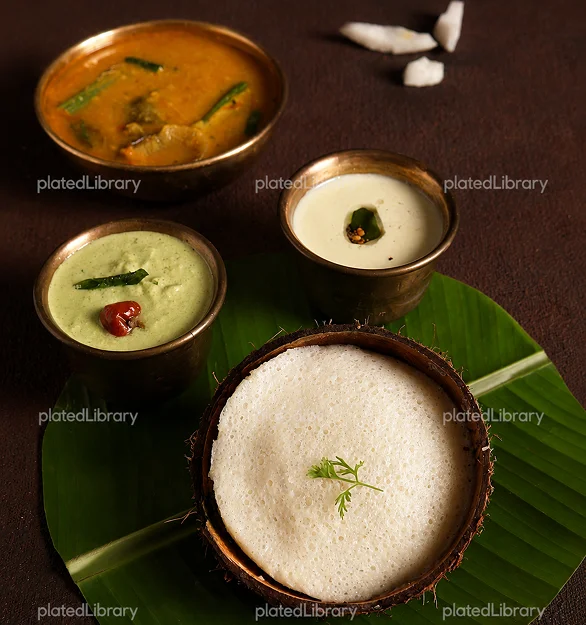
The early-morning question is familiar: What should I have for breakfast today? South Indian breakfast proves that a morning meal can be comforting, colorful and incredibly diverse.
From crisp golden dosas and fluffy idlis to creamy Pongal and soft appams, every dish brings a different combination of texture, color and presentation to the table. That visual variety is one reason South Indian food pictures are so appealing.
A well-captured food image can show what words sometimes cannot. The crisp edge of a dosa, the softness of an idli, the steam rising from Pongal or the contrast between coconut chutney and spicy sambar can instantly communicate what makes a dish special.
For food bloggers, restaurants, publishers and content creators, choosing the right images is therefore not simply about making a page look attractive. Food photography can help communicate the character of a dish before someone even reads about it.
Let’s explore some of the most popular South Indian breakfast dishes and what makes them so visually distinctive.
Why South Indian Breakfast Works So Well in Food Photography
South Indian breakfast offers an unusually broad visual palette. There are golden fried dishes, white steamed foods, colourful chutneys, rich curries, fresh herbs and dishes served in everything from traditional steel vessels to banana leaves.
The cooking methods also create noticeable differences in texture.
Fermentation produces soft and airy foods such as idli and dosa. Steaming gives dishes such as idli and puttu their characteristic appearance, while frying creates the golden surface of vada.
These differences make south Indian food pictures useful for more than decoration. They can help readers understand the food through visual cues.
A close-up photograph of a crispy dosa communicates its texture. A photograph of fluffy idlis served with chutney shows how the dish is traditionally presented. A wider breakfast spread, meanwhile, communicates the variety of a South Indian morning meal.
1. The Soft and Fluffy Breakfast Classic Idli
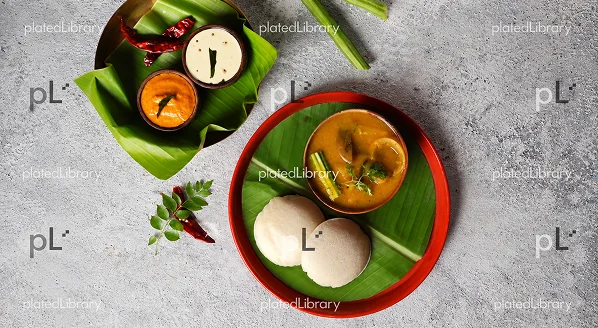
Few South Indian breakfast dishes have a more recognizable appearance than idli. These soft, steamed cakes are traditionally prepared using fermented rice and urad dal batter. Their round shape, pale color and fluffy texture make them instantly identifiable.
But an idli photograph becomes much more interesting when the dish is shown with its traditional accompaniments.
Place soft white idlis beside bright sambar and fresh coconut chutney, and the image immediately gains color and contrast. The combination also tells the viewer how the dish is commonly enjoyed.
This is where high-quality food images become particularly valuable. A close photograph can highlight the tiny air pockets and soft texture of the idli, while a wider composition can show the complete breakfast experience.
So, even within one breakfast category, food photography can show how regional variations differ.
2. Dosa: A Dish Defined by Texture
Dosa is perhaps one of the easiest South Indian dishes to appreciate through an image. A freshly prepared dosa can have a thin, crisp surface with golden-brown edges, while the inside may hold a soft potato filling.
A well-composed South Indian food image can immediately draw attention to the dosa’s crisp edges, folded shape and filling. When served with several chutneys and sambar, the photograph also captures the color and variety of the complete plate.
Dosa comes in several forms, making it especially useful for visual storytelling.
Masala Dosa
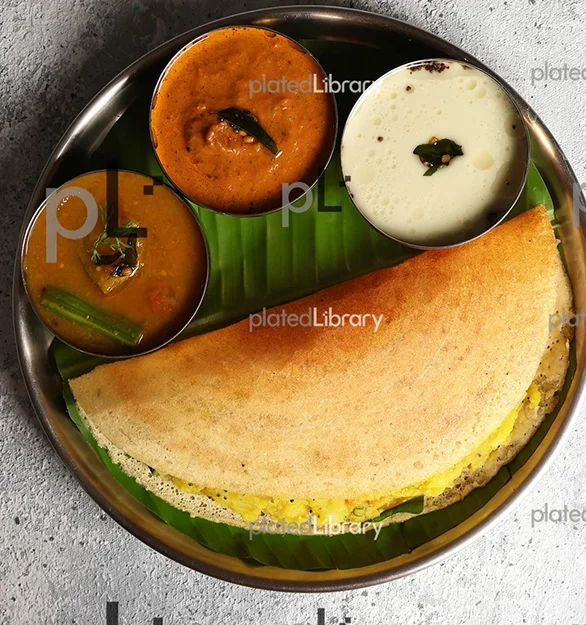
The classic masala dosa combines a crisp exterior with a spiced potato filling. Its golden surface and bright accompaniments create strong visual contrast.
Mysore Masala Dosa
Mysore masala dosa introduces another layer of colour through its red garlic-chilli paste. The paste is spread across the dosa before the potato filling is added, giving the dish a distinctly different appearance.
Rava Dosa
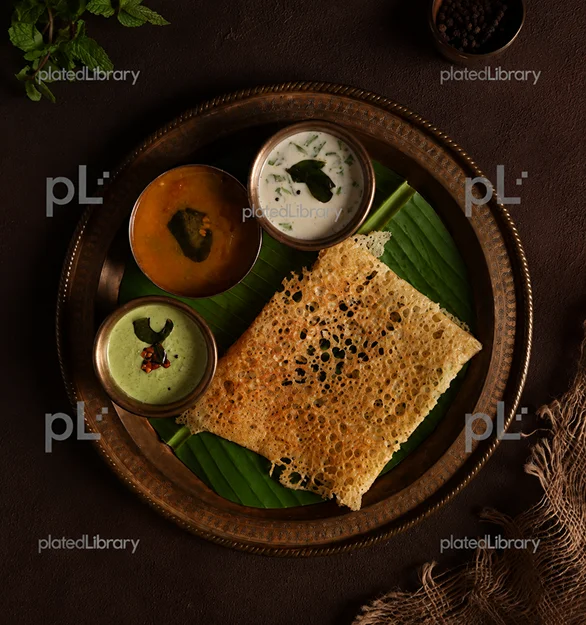
Rava dosa has a delicate, lace-like texture. Its irregular crispy edges make it particularly interesting to photograph from above or at a close angle.
Pesarattu
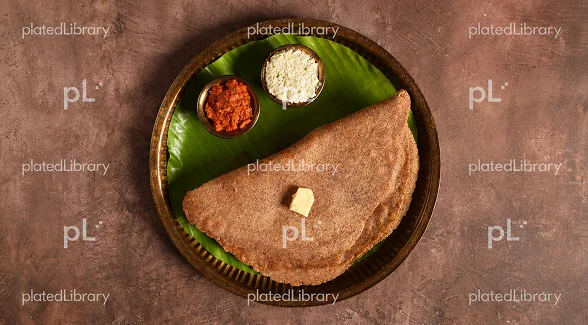
Pesarattu brings a completely different color to the plate. Made from whole green gram, this Andhra Pradesh specialty has a naturally green appearance and is often served with upma.
These variations demonstrate why South Indian breakfast images can be more than individual food photographs. A collection of dosa images can visually communicate regional differences, ingredients and textures at a glance.
3. Medu Vada: Where Crunch Becomes the Focus
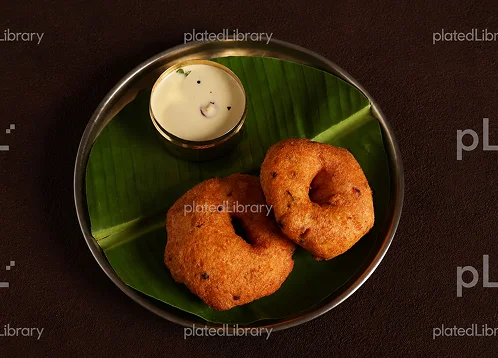
If idli represents softness, medu vada represents crunch. These golden fritters are made from spiced urad dal batter and fried until crisp on the outside while remaining soft and airy inside.
A close-up image can show the rough, crisp exterior, while a cut or broken vada can reveal the lighter interior. Add a bowl of sambar or coconut chutney to the frame, and the photograph begins to tell the story of how the dish is eaten.
This is an important part of food image presentation. Showing only the finished dish can tell viewers what it looks like, but showing texture, accompaniments and serving style can communicate much more.
4. Upma and Kesari Bath
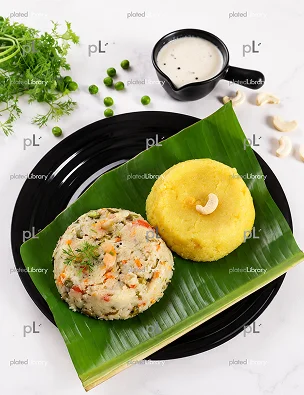
South Indian breakfast is not only about crispy and steamed dishes. Upma offers something warmer and more rustic.
Prepared using roasted semolina, vegetables, mustard seeds, lentils, ginger and green chilies, upma has a soft, grainy texture and a naturally warm appearance.
In Karnataka, it is often paired with Kesari Bath, a sweet semolina preparation made with ingredients such as saffron, ghee, cashews and raisins. Together, they form the popular combination known as Chow Chow Bath.
This pairing is particularly interesting from a visual perspective because the two dishes create an immediate contrast.
A photograph showing both dishes together can therefore communicate the sweet-and-savory character of the meal without relying entirely on written explanation.
This is one reason food images are so useful in culinary content: color and composition can enhance the information in the text.
5. Pongal: Comfort Food in a Bowl
Unlike the crisp surface of dosa or vada, Pongal is soft, creamy and comforting. Rice and yellow moong dal are cooked together until they reach a rich consistency, then seasoned with black pepper, cumin, ginger and curry leaves.
A good Pongal photograph should allow that texture to remain visible. For food websites and editorial content, this kind of image is valuable because it helps readers understand the dish’s texture before they even try it.
The visual story changes again when Pongal is photographed alongside chutney or sambar. Suddenly, the image communicates not only the dish itself but also the way it forms part of a larger breakfast.
6. Uttapam: Thick, Colorful and Full of Toppings
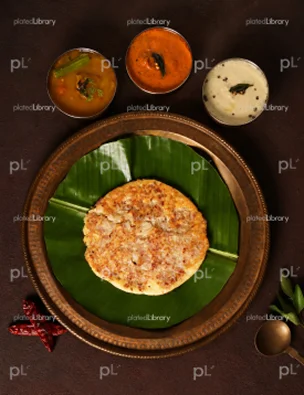
Unlike a thin dosa, it has a thicker and softer center. Chopped onions, tomatoes, green chilies and other vegetables are commonly spread over the surface before cooking. That makes uttapam one of the more colorful South Indian breakfast dishes to photograph.
The toppings create natural visual layers. Red tomatoes, green chilies and onions stand out against the golden surface of the uttapam.
A close-up photograph can focus on these toppings and the lightly crisp edges, while a wider image can show the uttapam alongside chutney and sambar.
For South Indian food photography, dishes like uttapam demonstrate how ingredients themselves can become part of the composition.
7. Appam and Stew: Kerala’s Delicate Breakfast Combination
Appam offers yet another texture. This Kerala specialty has a thin and a soft, spongy center. It is traditionally made using fermented rice batter and coconut milk.
Its appearance is delicate, which makes close-up photography especially effective.
The slightly crisp outer edge contrasts beautifully with the soft center. When several appams are arranged together, their layered, bowl-like shapes create an interesting composition.
Appam is traditionally served with a mild vegetable or chicken stew prepared with coconut milk and gentle spices.
Including both in the same photograph is important because the two dishes are part of the same eating experience. The pale appam against a creamy, aromatic stew creates a subtle visual contrast that helps convey the character of Kerala’s breakfast table.
South Indian Breakfast: A Feast for the Camera
One of the biggest strengths of South Indian cuisine is its visual diversity. Consider the differences:
| Dish | Main Visual Character | What an Image Can Highlight |
|---|---|---|
| Idli | Soft and white | Fluffy texture and accompaniments |
| Dosa | Golden and crisp | Thin edges, filling and chutneys |
| Medu Vada | Golden and crunchy | Crisp exterior and airy center |
| Upma | Warm and grainy | Vegetables and tempering |
| Pongal | Soft and creamy | Ghee, spices and texture |
| Uttapam | Thick and colourful | Fresh vegetable toppings |
| Appam | Delicate and lacy | Crisp edges and soft center |
| Puttu | Layered and textured | Coconut and grain structure |
This variety explains why south Indian food pictures can work across different types of digital content.
Why High-Quality South Indian Food Images Matter
Food photography is not simply about making a dish look attractive. The right image can help answer questions that readers may have before they even begin reading.
What does it look like?
A photograph gives an immediate answer.
Is it crispy, soft or creamy?
Texture-focused photography can provide visual clues.
What is it served with?
A wider composition can show chutneys, sambar, curry or other accompaniments.
How is it traditionally presented?
Serving vessels, banana leaves and regional presentation styles can add context.
How are two dishes different?
Side-by-side photography can make regional and ingredient variations easier to understand.
For this reason, high-quality South Indian breakfast images can support both storytelling and information.
Conclusion
There is something visually distinctive about almost every dish. For food bloggers, restaurant owners, content creators and culinary publishers, these visual details provide an opportunity to make food content more engaging.
Whether you are showcasing a single dish, building a digital menu or creating a collection of South Indian food pictures, strong imagery can help readers connect with the food before they taste it.
That is where a curated visual resource can make a difference. Plated Library brings together professionally curated food content, recipes, presentation resources and culinary inspiration to help creators showcase food through stronger visual storytelling.
From traditional breakfast dishes to regional specialties, the right image can turn a simple food description into an experience.
FAQs
Popular options include idli, dosa, medu vada, upma, Pongal, uttapam, appam and puttu. Each has its own texture, preparation method and regional variations.
They offer strong visual variety through different colors, textures, shapes and serving styles. Crispy dosa, fluffy idli, golden vada and colorful chutneys can all create distinctive food images.
A strong image can show more than the main dish. Including texture, accompaniments, serving style and ingredients can help viewers understand the food and its presentation.
Dosa is particularly versatile because it comes in several forms, including masala dosa, Mysore masala dosa, rava dosa and pesarattu. Uttapam, puttu and breakfast combinations such as idli with sambar also offer strong visual contrast.
Food bloggers, restaurants and content creators can explore curated food-content libraries such as Plated Library for visual inspiration and professionally presented culinary content.